
Egypt: where history cannot be contained in books
Pyramids. Pharaohs. The Nile. There are destinations that you put off visiting your whole life because, deep down, you know they deserve more than just a week of rushed sightseeing. This is one of them.
Egypt is unlike any other destination. Not because it is spectacular — though it certainly is — but because it confronts you with something that few civilisations have left behind on earth: physical evidence that they ever existed. Monuments on a scale that defies reason. Temples that the desert has safeguarded for centuries, as if it knew that one day someone would need them again. And a river that has been the lifeblood of an entire civilisation for five millennia.
This tour has two distinct paces, and that’s part of what convinced me to choose it for the group. A slower pace, that of the Nile: sailing amongst temples, letting the landscape change with the light, reading history directly from the stone. And a more intense one, that of Cairo: the city that links ancient Egypt with the modern, with all the energy and noise that entails.
It’s not a trip to see everything. It’s a trip to understand something.
The itinerary has been designed by a specialist tour operator in Egypt. I’ll be travelling with the group as the tour leader: the person who has chosen this tour and who will be with you every step of the way, so that you can focus on the only thing that matters – enjoying the experience.
What we’re going to look at — and what it means
Day 1. Cairo. Arrival
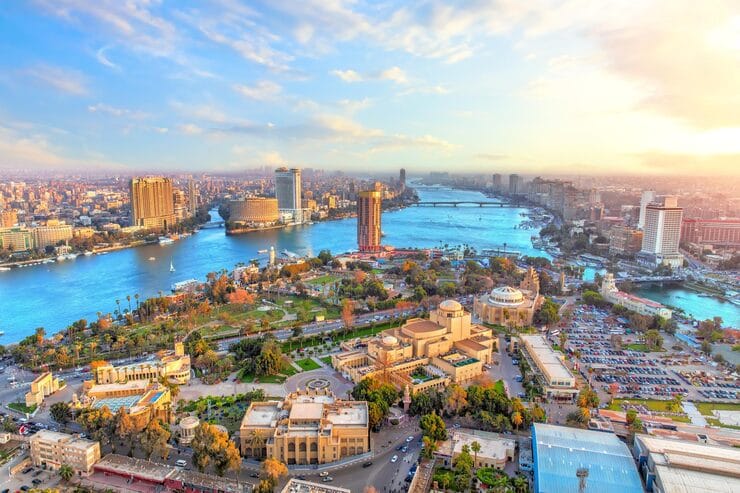
You land at Cairo and something changes instantly in the air: the heat, the light, the rhythm of a city that has been welcoming travellers for thousands of years. Someone is there to ensure that everything runs smoothly from the very first minute.
The afternoon is yours to spend as you wish. There’s no rush. It’s time to let your body take in where you’ve arrived, to take a leisurely look around the city before the real tour begins tomorrow.
Day 2. Cairo: where it all begins
There’s one morning you’ll remember for the rest of your life, and it’s usually this one.
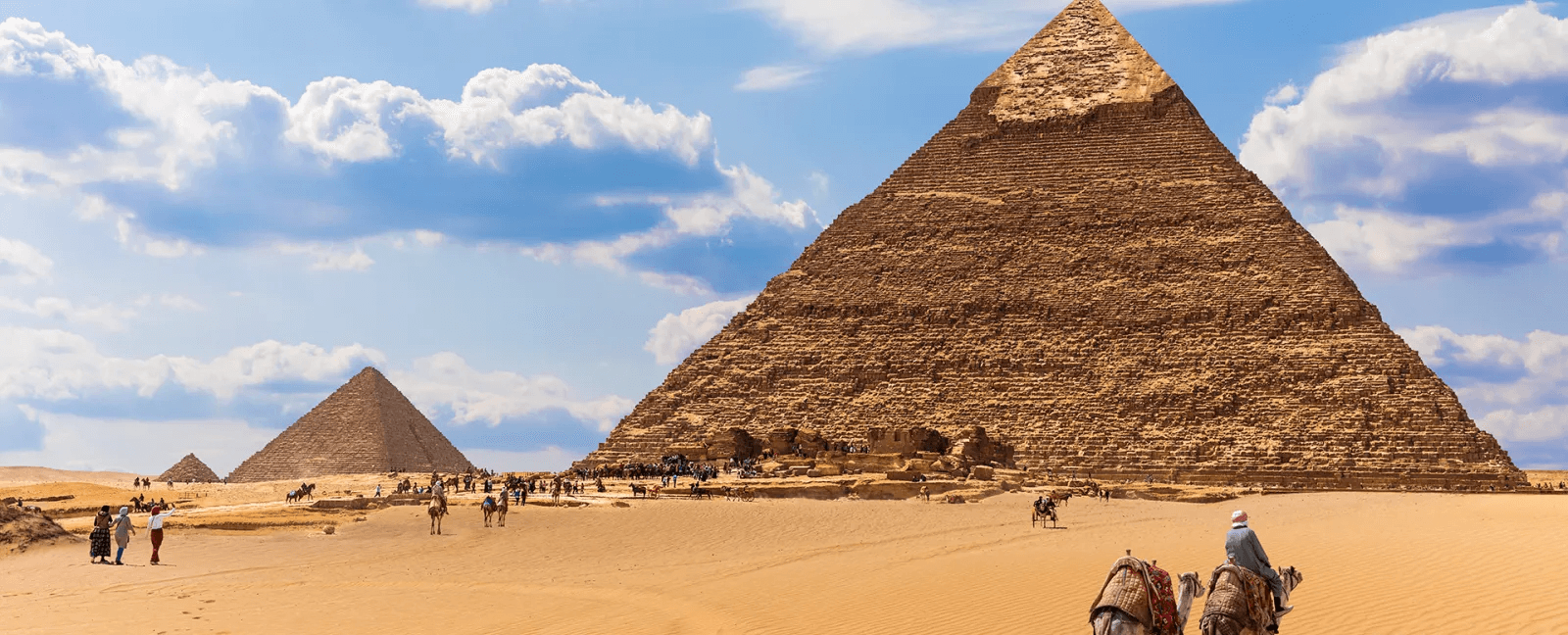
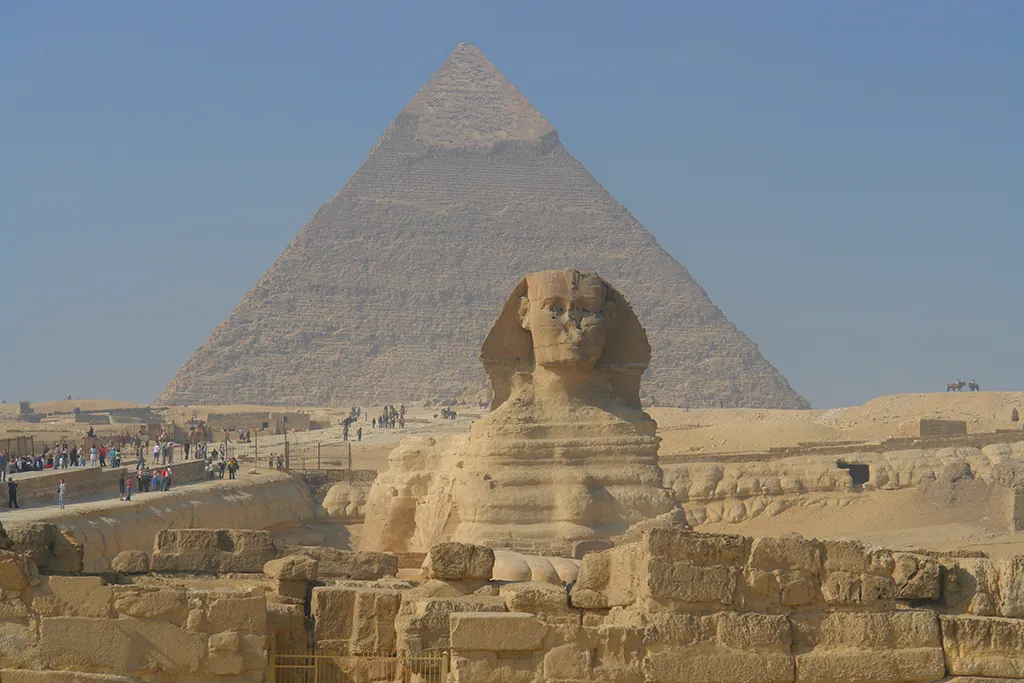
In the Giza Necropolis Here stand the only surviving examples of the Seven Wonders of the Ancient World: the Pyramids of Khufu, Khafre and Menkaure, built over 4,500 years ago. Nothing you’ve seen in photographs can fully prepare you for the sheer scale of them in real life. And the Great Sphinx, carved from a single block of limestone, gazing out towards the horizon for millennia, indifferent to the comings and goings of those who come to admire it.
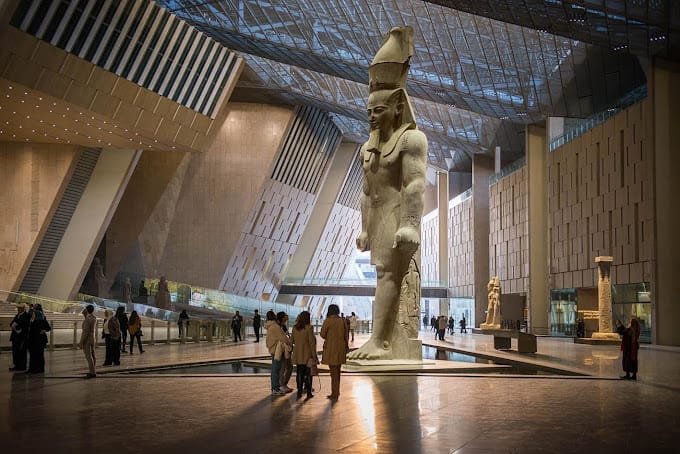
After a lunch with a local flavour, the Grand Egyptian Museum It brings the morning’s tour full circle: the world’s largest archaeological museum, housing over 100,000 artefacts, including the complete collection of Tutankhamun’s treasure. It is the place where everything we have seen carved in stone is given a name, a history and a sense of detail.
As evening falls, a night train takes you southwards, towards Aswan. Sleeping to the clatter of the train and waking up in Upper Egypt feels a bit like a rite of passage.
Day 3. Aswan: the source of the river
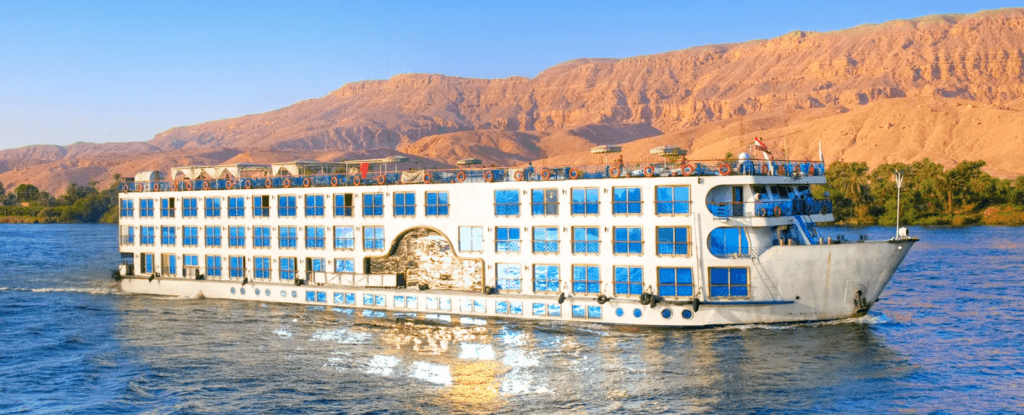
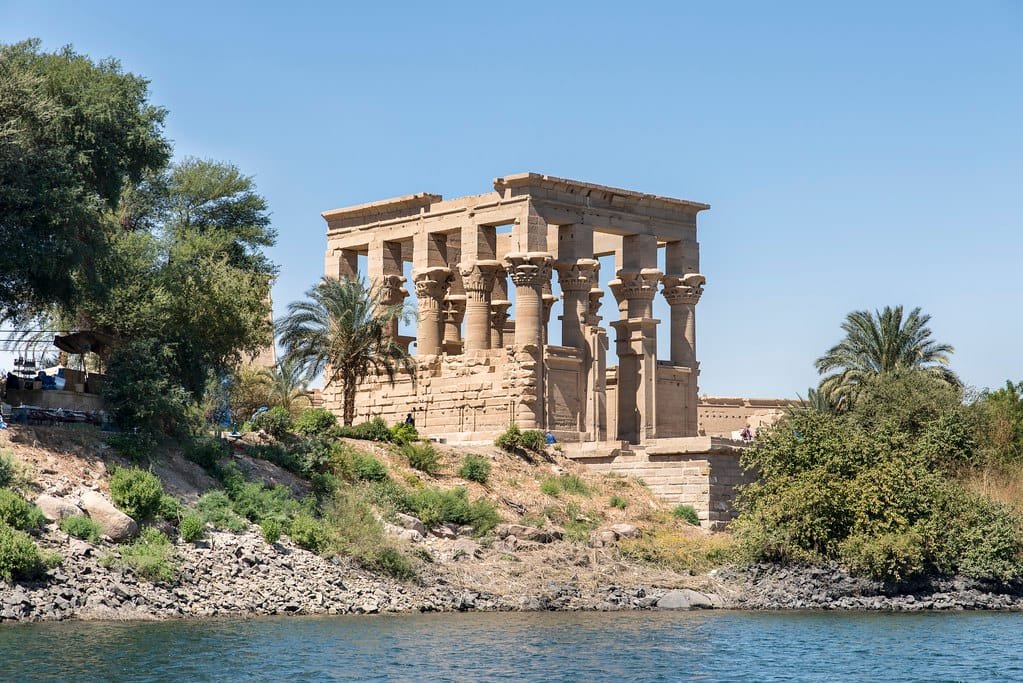
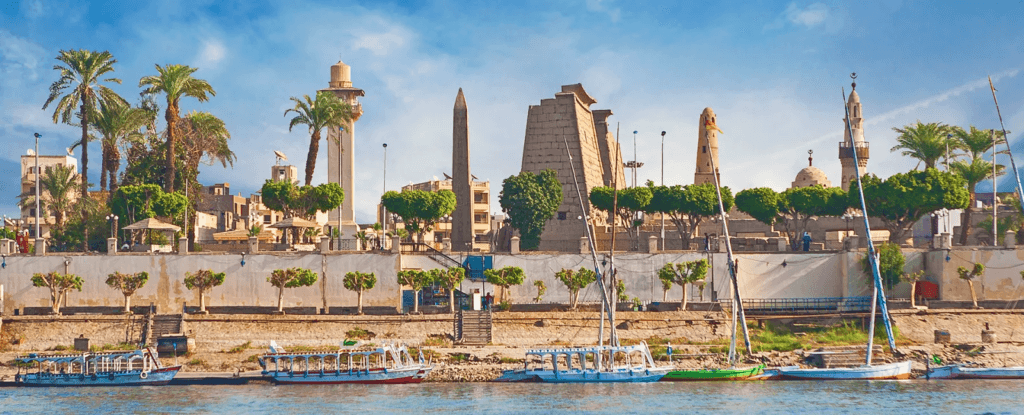
The journey truly begins where the Nile first tells its story. Aswan welcomes you with a different light – clearer, more tranquil. This is where your time on board begins, as you sail along the very river that has set the pace of Egypt for five millennia.
The Philae Temple It is dedicated to Isis, goddess of motherhood and magic. What is extraordinary is not just its beauty: it is the fact that it was dismantled stone by stone and moved to a nearby island to save it from the waters of the Aswan Reservoir. An archaeological operation without precedent in the 20th century. Philae survived because the world decided it deserved to survive.
The Unfinished Obelisk reveals, better than any book, how stone was carved in Ancient Egypt — left half-carved, with a crack that put an end to its destiny forever. And the Alta Dam It brings home the scale of the engineering feats that transformed the country in the 20th century.
Anyone wishing to go one step further can visit a Nubian village and discover that modern-day Egypt has just as many layers as ancient Egypt.
Day 4. From Aswan to Edfu: the desert and the sunrise
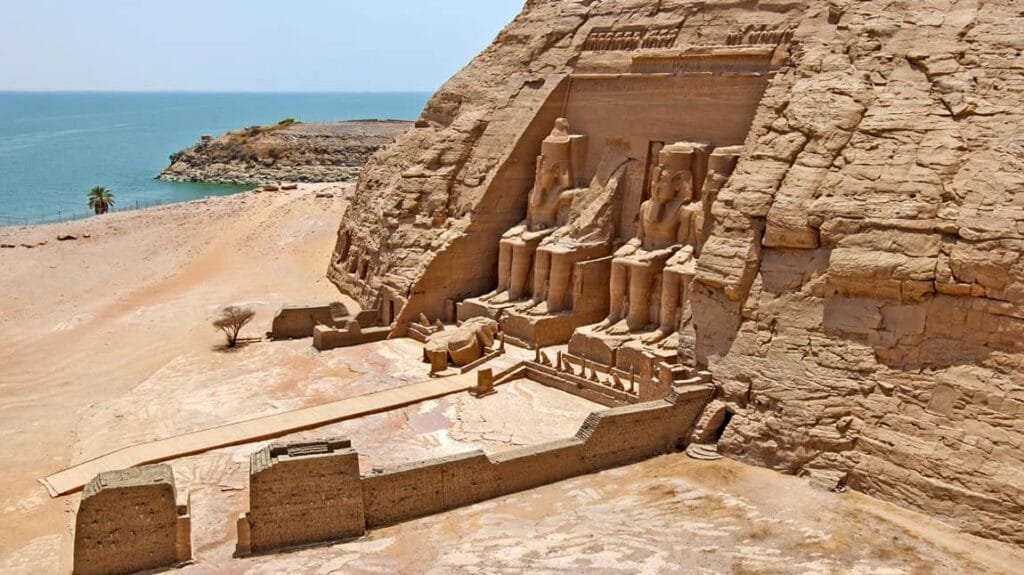
For those who choose to get up before dawn, Abu Simbel It awaits you on a scale that defies belief: the rock-cut temple of Ramses II, built for himself and Queen Nefertari, featuring four twenty-metre-tall seated statues carved directly into the rock on the shores of Lake Nasser. Like Philae, it was moved stone by stone in the 1960s to save it from the rising waters. It’s worth every minute of getting up at the crack of dawn.
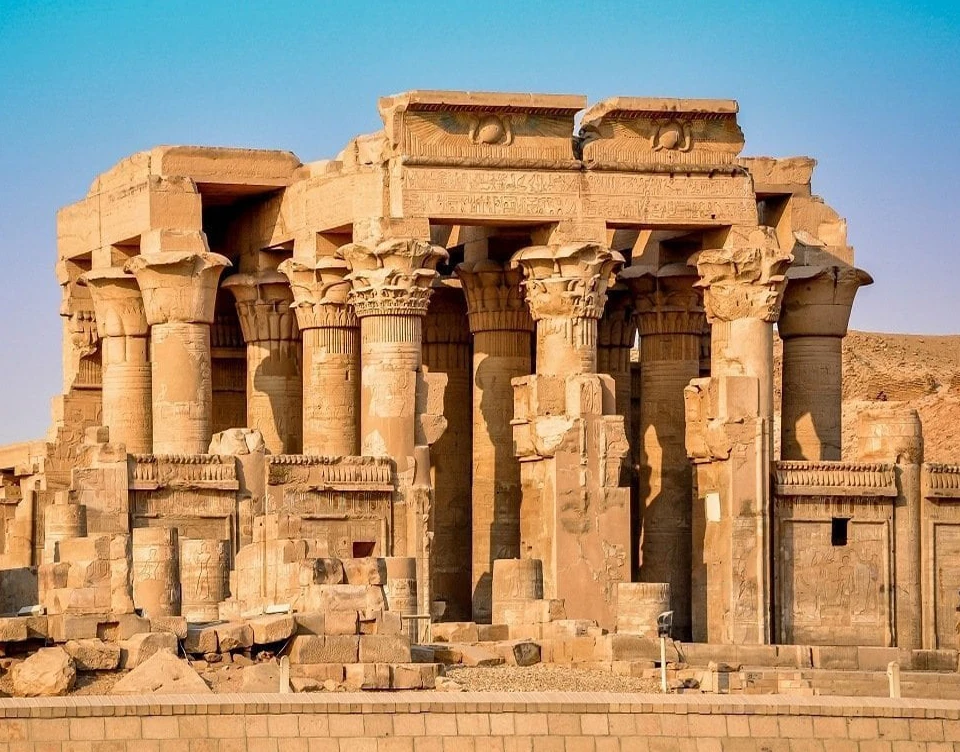
The cruise ship then sets sail for Kom Ombo. Kom Ombo It almost seems like an illusion: a double, symmetrical temple, divided exactly down the middle to honour two gods who could not share the same space. On one side, Sobek, the crocodile god. On the other, Horus the Elder. Even the architecture reflects the theology. The Museum of the Mummified Crocodile, just nearby, adds a more intimate and surprising dimension to the tour.
The boat then continues on to Edfu.
Day 5. From Edfu to Luxor: the world’s largest open-air museum
The morning begins with a scene that seems straight out of another century: a horse-drawn carriage takes you to the Edfu Temple, the second-largest temple in Egypt and the best-preserved from the Hellenistic period. It lay buried under twelve metres of sand until the 19th century. Twelve metres. That gives an idea of what the desert can conceal, and of what may still remain to be discovered.
The cruise sets sail for Luxor, and upon arrival, late in the afternoon, the tour continues without a moment’s respite. If Aswan was the prologue, Luxor is where history really grabs you by the shoulders.
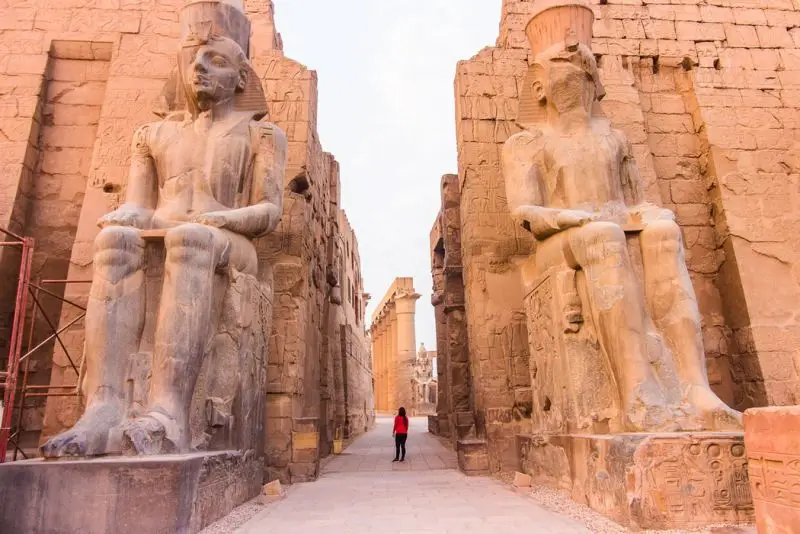
Karnak, the largest temple complex in Ancient Egypt: avenues of sphinxes, obelisks, chapels, hypostyle halls with columns that make you feel small – not in an uncomfortable way, but in a way that feels necessary. You can’t take in Karnak in a single visit: it builds up on you. And the Luxor Temple, which rounds off the afternoon with the same understated grandeur.
Day 6. From Luxor to Cairo: the Valley of the Dead and the return journey
Anyone who fancies a sunrise hot-air balloon ride On the west bank of Luxor, you’ll probably experience the most memorable sight of the whole trip: the Nile, the temples and the desert, seen from the absolute silence of a basket suspended in the air. It’s a perspective that no history book can give you.
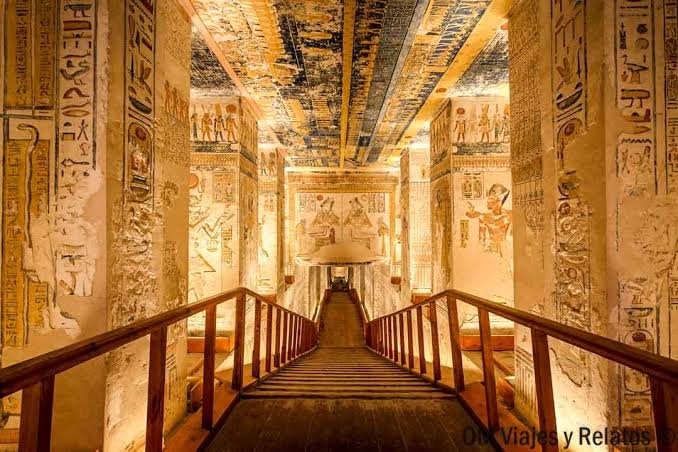
Next comes the Valley of the Kings, where 63 tombs from the New Kingdom lie — 63 pharaohs who chose this place for their eternal rest. Among them is Tutankhamun, whose tomb was the only one to survive into the 20th century virtually intact. To descend into those chambers is to step into a silence that has lasted three thousand years.
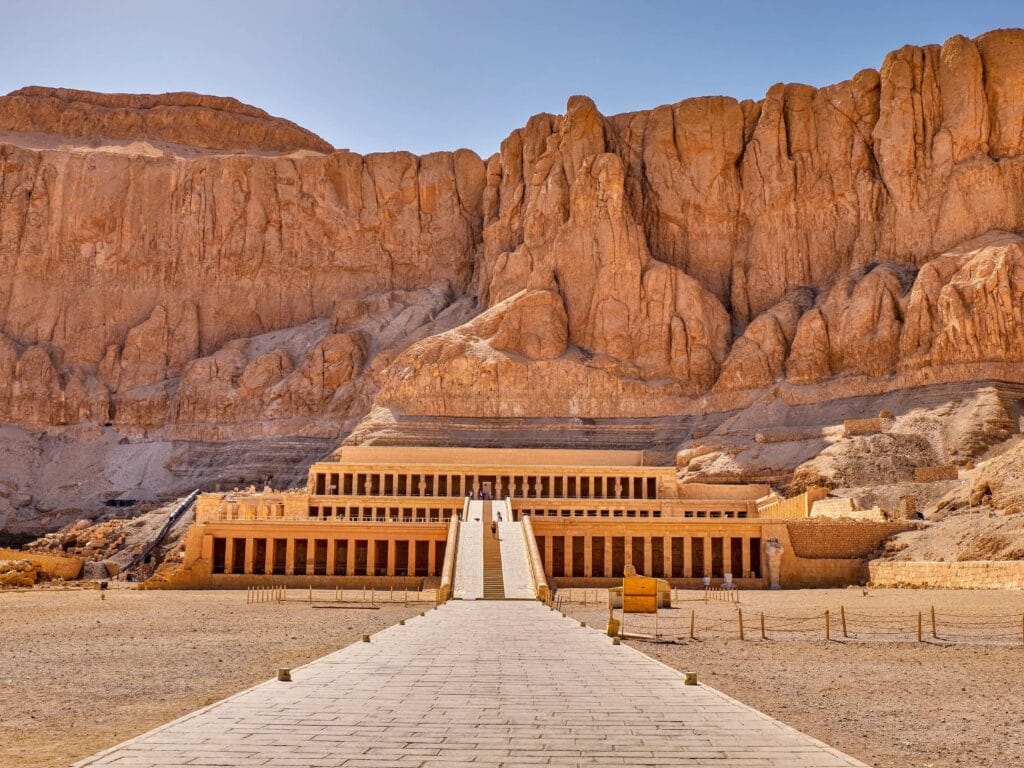
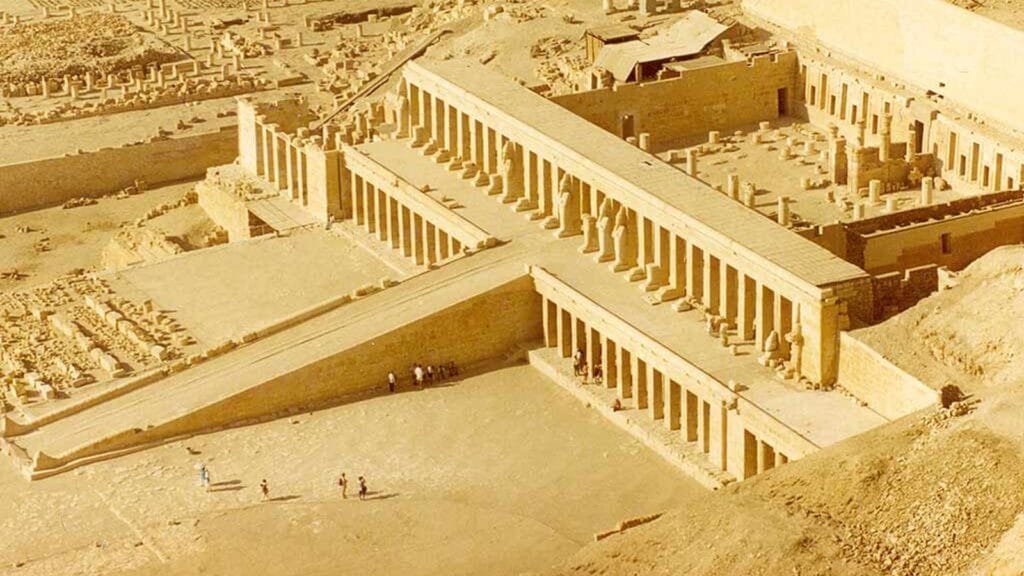
Very close by, the Temple of Hatshepsut —Deir el-Bahari— is dedicated to the female pharaoh who ruled Egypt for the longest period. Not a queen consort: a female pharaoh. Her temple is a statement of authority carved directly into the cliff face.
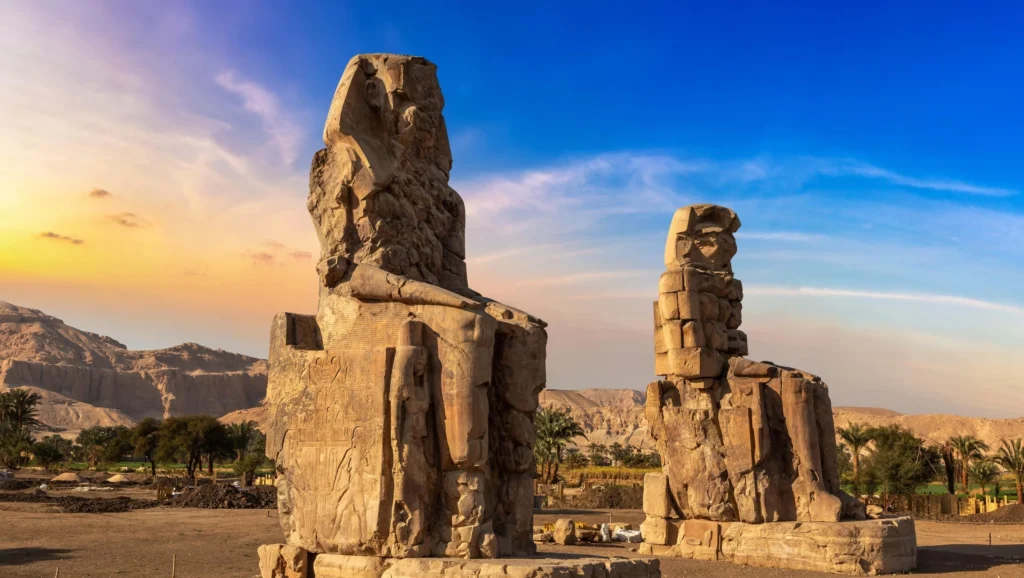
And the Colossi of Memnon, what remains of what was once the country’s largest temple. Just the two statues, each weighing 720 tonnes, standing alone on the plain. There is something very powerful about seeing what remains when everything else has disappeared.
At the end of the day, a final night train takes you back to Cairo.
Day 7. Farewell to Cairo
The train arrives first thing in the morning. Someone will be there to meet you and take you to the airport — or wherever you’d prefer — thus bringing to a close a journey that began with the promise of a river and ends with the certainty that you’ve come to understand it a little better.
Beyond the route — For those who want to go one step further
There are experiences that aren’t part of the main itinerary but which, for some travellers, turn out to be the most memorable part of the trip. I offer them as options; we organise them to suit the group.
Abu Simbel
The rock-cut temple of Ramses II on the shores of Lake Nasser. Like Philae, it was moved stone by stone in the 1960s. Unlike Philae, it is on a colossal scale: four seated statues, each twenty metres high, carved directly out of the rock. It requires an additional flight from Aswan. It’s worth every minute.
Hot-air balloon ride over Luxor at dawn
Flying over the Valley of the Kings as the sun begins to cast a golden glow over the western bank is one of those experiences that is quite unlike any other. Silence, altitude and a perspective that no history book can ever give you.
Saqqara — Egypt’s oldest pyramid
The Saqqara necropolis is home to the Step Pyramid of Djoser, the oldest of all those we shall see. It is the first great stone structure in human history. The place where it all began.
Saladin’s Citadel and the Alabaster Mosque
Islamic Cairo, towering over the hill. The alabaster mosque dominates the city skyline with an elegance that contrasts with the pharaonic scale of the rest of the journey. A reminder that Egypt has many layers.
Alexandria
The city of Cleopatra, of the ancient library, of Alexander the Great. Today, the Citadel of Qaitbay overlooks the Mediterranean from the site of the former lighthouse; the Catacombs of Kom el-Shoqafa blend cultures in an underground labyrinth; and the new Bibliotheca Alexandrina pays tribute to what was once the greatest repository of ancient knowledge.
It’s not just any old travel group. I’m coming with you
You could go to Egypt with any tour operator. There are tours to suit all tastes, at all times of day.
The difference isn’t in the route. It’s in who’s by your side.
I travel with the group as the tour leader. That means I’m right there with you: in the same heat, sharing the same sense of wonder, taking care of whatever is needed so that you don’t have to worry about anything other than enjoying the trip. There isn’t a customer service representative on the other end of the phone. There’s a real person, right there with you, who knows the group because they’ve put it together.
Is this trip right for you?
If anything you’ve read has struck a chord with you, the next step is simple: tell me who you are and what you’re looking for. That way, I can let you know whether this trip matches what you have in mind, and exactly what it involves.
You can also check the general terms and conditions for group trips before writing to me.
Egypt has been waiting for centuries for those who come with genuine curiosity. The pharaohs built for eternity. We are going to understand them, even if only for a week. And we’ll do it together.
 Español
 English (UK)